Tag: health

  • When Is Enough, Enough?

    WHEN IS ENOUGH, ENOUGH?

    Sure, every relationship has its challenges. This can become more highlighted over the holidays, with spending too much time together, or feeling disappointed by a lack of attentiveness over the festive season. But when is enough, enough?
    When does trivial irritation become toxic? There can be a lot of victim blaming at the end of the line, and perhaps both partners become the victim in some way. Some relationships fizzle out peacefully, while others become toxic and explosive.

    And how do we react to these stressors? The truth is that when a relationship becomes toxic or abusive, your body is programmed to protect itself. If you are under verbal or physical attack, you are eventually going to respond, no matter how you may try to stay calm.

    This is because every nervous system has its limits, and once reached something has to give. Whether it’s fight, flight or freeze will depend on your wiring, your trauma and your situation.

    These are automatic, instinctive stress responses that prepare your body to survive a perceived threat, involving physical reactions like increased heart rate (fight/flight) or going still/numb (freeze) as your nervous system mobilizes for action or shutdown. It’s often seen in anxiety or trauma but was once useful in genuine danger. (And still can be).

    More recently another response has been added: Fawning.
    Let me break these down, you’re bound to recognise one in yourself.
    Fight: Preparing to confront the threat, potentially through aggression, arguing, or physical struggle.
    Flight: Instinct to escape or run from the danger by putting distance between yourself and the threat.
    Freeze: Feeling stuck, numb, or unable to move or speak, your body goes rigid, which can help you hide or assess the danger.
    Fawn: Trying to appease or please the threat to avoid conflict, often seen in trauma. 

    When you feel under attack, a number of factors come in to play physiologically.
    -Your amygdala becomes triggered in your brain.
    -Your heart rate and breathing speed up to deliver oxygen for your body to perform at is best.
    -Your muscles tense and prepare for action.
    -Your pupils dilate, hearing sharpens, and peripheral vision increases to assist you.
    -Your blood is redirected to major muscles, making your hands/feet cold and even clammy, and your clotting factors increase. 

    Your body is an incredibly smart survival machine, and this all happens automatically. Although you are unlikely to be chased by a bear these days, it will still be triggered by genuine danger or by non-threatening situations if you have experienced trauma or have anxiety disorders.

    So an argument with your partner can lead to over stimulation and overactivity of the amygdala (that primitive part of your brain that is trying to keep you safe), and set all these physiological responses in motion.

    Perhaps you are being victimised at work?
    You are unlikely to punch your boss in the face, or run out of the boardroom. You are most likely to freeze or fawn. But over time, if the victimisation continues you will probably walk out, or hand in your notice quietly and never go back.

    Perhaps you are in a toxic romantic relationship?
    You might become emotionally distant over time, to guard yourself from the pain being inflicted. Disappear from their DMs, ghost their calls. Or try to outrun the situation by driving somewhere or locking yourself in a bathroom when a conflict escalates in your physical space. (And earn the label of ‘avoidant’, which can also be a form of victim-blaming, but is also a form of self-protection).

    In a family or work or romantic relationship flight is not always an immediate possibility. This could be due to financial reasons or because you are physically being prevented from walking out. And that is when you might freeze, fawn or eventually, fight.

    This is a survival response that is hardwired into your nervous system. It’s intended to protect you from physical harm, but it kicks in for psychological harm too as your blood pumps full of adrenalin. And before you know it, you find yourself cornered and start lashing out like a wild animal. This is called reactive abuse and you are probably going to feel awful about it the next day.

    And although you can’t help it, this is a very damaging response, and you need to know that it’s not your fault. You are not a monster, and you are not the abuser. You are only human, and your nervous system is trying to survive under intense emotional or physical threat.

    If your situationship remains unchanged, over time you might begin to develop CPTSD. This happens if the abuse is ongoing and you cannot get away.
    Complex PTSD (Post Traumatic Stress Disorder) is a condition resulting from prolonged or repeated trauma, like chronic abuse or neglect. Verbal and emotional abuse fill this category too.

    The problem with reactive abuse is that it’s very dangerous territory. It shifts you temporarily from victim mode into self-defence, and for a moment your partner will see YOU as the abuser. You might scratch, pull hair, lash out or shove this person in panic or an attempt to make them stop, or to get away from them.

    If you are fortunate, a surprise show of strength might result in your partner backing down, this time. But over time, or perhaps immediately your partner will become more enraged, placing you at a greater risk.

    If your reaction produces an even more extreme reaction in your partner, it will escalate the situation. And they might even use it against you, threaten to video your reaction, or shame you and justify their own behaviour. Perhaps even blackmail you to keep you under their control.

    What is important in these types of relationships is to have an exit plan and start implementing it.
    Tell somebody.
    Speak to somebody about an emergency place to sleep for future incidents.
    File a report.
    Get a restraining order.
    Get a job.
    Start saving.

    In the meantime, there are some other things that you can do to regulate your own nervous system.
    Start by understanding your pattern (fight, flight, freeze, or fawn), this is the key to managing it. Recognise what is triggering you and take steps to avoid it where possible. Give some thought to how you can circumvent or de-escalate the situation from your side by recognising your partner’s triggers. Now, I’m not suggesting you walk on eggshells forever, just until you can make a nice toward safety or work out a better way to respond.

    Start practicing techniques that can carry you through this situation while you are working on your exit plan. Try mindfulness, grounding techniques, exercise, therapy, and self-care can help calm an overactive stress response. Positive visualisation and body talk.
    Ask for help and start taking positive steps to change your situation.
    You deserve a peaceful relationship or environment in which to grow and thrive.

    I am a holistic life coach and wellness coach, with a special interest in relationships and woman empowerment.
    T/DR Candice Baker
    00013133614
    You can book a session with me on WhatsApp
    +0027833613255
    “Your most aligned life is crafted—element by element.”

  • Menopause Mayhem-Volume One

    MENOPAUSE MAYHEM-VOLUME ONE

    Menopause Mayhem- Volume 1
    For every woman experiencing the train wreck that is menopause, there is the realisation that the information around it does not flow freely. Yes, we all know about rage and mood swings, but there is so much more.
    I’ve been doing some research, and I’ll be sharing it to raise awareness, because I understand how it can feel like you’re going crazy and don’t know why!

    Today’s issue: Sensory Overload
    Did you know that menopause can cause sensory issues? This can lead to heightened sensitivity (sensory overload) or altered sensations like skin prickling, taste/smell changes, and balance problems, largely due to fluctuating estrogen affecting brain chemistry (serotonin, dopamine) and nerve pathways, impacting how you perceive the world. These shifts can make you more sensitive to lights, sounds, textures, and smells, impacting daily coping.

    Here are some common Menopause-Related Sensory Issues:
    Heightened Sensitivity (Overload):
    Your partner has verbal diarrhoea while you’re trying to watch a movie and it’s taking every ounce of self control not to stab him with your dinner fork. Normal stimuli (lights, noises, crowds, textures) can feel overwhelming, triggering panic or needing to escape.

    Altered Skin Sensations: Are your feet on fire, without doing the fire walk your guru says will change your life? You might be experiencing formication (insects crawling), burning, itching, numbness, or tingling (paresthesias).

    Taste & Smell Changes: You used to love mincemeat and now you can’t even cook it without gagging like an adult film star.
    Fluctuations in estrogen can alter your sense of smell and taste, or cause a burning mouth sensation (burning mouth syndrome).

    Balance & Coordination: You tried to catch the cat, went flying out of your bedroom door and impaled your boob on the garden gnome. Changes in the cerebellum, affected by hormones, can lead to dizziness, vertigo, clumsiness, and spatial disorientation.

    Touch Sensitivity: Your forehead is flaking like an old paint job and you have to sit on your hands to stop clawing at your face.
    Skin can become drier and more sensitive, or conversely, responsiveness to touch (even intimate) might decrease.

    Why It Happens:
    -Estrogen Decline: Estrogen influences neurotransmitters like serotonin and dopamine, crucial for mood, cognition, and sensory processing. Lower levels disrupt these pathways, lowering your sensory threshold.
    -Nervous System Impact: Hormonal shifts affect nerve function, potentially increasing pain perception and disrupting sensory input.

    If you have read this and some of these issues have resonated with you, there are some things you can do.
    Now that you know you’re not going crazy, give some thought to how you can adapt to this new and confusing version of you. Recognising these changes are hormonal, not you being “difficult,”is the first step. Try adjusting your environment (dim lights, quiet spaces) to feel more comfortable.

    Seek support from a doctor or therapist, or life coach like me. A menopause coach perhaps, it’s important to speak with somebody who has knowledge of menopause and its symptoms. Women have been gaslit by the medical community for far too long. Cognitive Behavioral Therapy (CBT) can help manage overwhelming feelings, and is such a great life skill to learn in general.

    Start managing underlying factors like getting a hormone test and putting in place a plan to correct them holistically or with HRT. Address stress, sleep, and overall health, as these can worsen sensory issues. Once you’ve realised you’re not the problem and your hormones are betraying you, you can approach these challenges with more insight and patience, and make some key changes to suit this latest version of you. After all, sometimes a little rage is a valid and necessary thing. People pleasing is so last decade. Anyway, this is me signing off because my socks are driving me nuts…

    I am a holistic life coach and wellness coach, with a special interest in relationships and woman empowerment.
    T/DR Candice Baker
    00013133614
    You can book a session with me on WhatsApp
    +0027833613255

    “Your most aligned life is crafted—element by element.”

  • Did You Move To Trigger Town?

    DID YOU JUST MOVE TO TRIGGER TOWN?

    We’ve all been there. You asked your partner if the pool will be blue for the weekend and he lost his shit.
    He tapped you on the butt in the kitchen and you bit his head off.
    This is because without regulating our nervous systems, we’re all basically one eye roll away from a major tantrum.

    So why does something seemingly simple spike your anger like a rocket? Afterall, most of us are self-aware enough to know the argument wasn’t actually about stepping into the cat puke this morning.

    Firstly, when our nervous systems are overwhelmed we tend to run on survival mode. Your vagus nerve is stuck on fight/flight mode. Secondly, you have a ticking time bomb in your stomach and a vice grip around your heart, which is amplifying your anxiety. This is because the vagus nerve connects your body to your brain, so you feel your stress quite viscerally. In medical terms, you’re operating in sympathetic mode, your body is flooding with adrenaline and your heart rate is elevated.

    Then along comes a minor irritation and you find yourself on your broomstick before they could blink twice for help.
    This is where trigger stacking comes in. It’s an accumulation of both large and small stressors, which build up into a big reaction. One that leaves people wondering why you burst into tears over the order mix up at Micky D’s. Or a major tantrum in the parking lot sending the car guard scurrying off to safety.

    There are some useful tools you can put to work here. The first being to take a big breath and a slow exhale when something is really pissing you off. This pause will gift you (and everyone else in the room) the opportunity to choose how to respond. And it can make all the difference. Some words will stay with people long after you regret has faded.

    Before you go on the war path, there are some more nervous system techniques you can learn to keep things from overwhelming you.
    -You can cultuivate a sense of detachment where you can observe that thought. ‘Oops, there I go again’, let me change tack before the wrecking ball is unleashed.
    -That pause and exhale, will give you the opportunity for mindfulness, to assess whether your emotion was justified, or the result of trigger stacking.
    -Remove yourself from the situation and sit calmly till the visceral feelings in your body calm down. Notice your heart rate and breath, and start to slow it down.
    -Once your body and mind are feeling calmer, you can think more clearly and decide whether to return to the room. ‘Was it me?’ ‘Did I deserve that?’ ‘Were they out of line?’ ‘Unnecessarily rude to me?’ ‘Who needs to apologise?’ ‘Can I re-frame this and empathise with the other person?’
    Most importantly, if the conflict was justified … ‘Is it safe to go back?’

    If you’re feeling that your entire life has turned into a shit show, you are the victim of trigger stacking and you should take a look at ways to flip your script. Yoga and meditation are great ways to bring your nervous system into parasympathetic mode. Your body will soften, the intrusive thoughts will fade, and your muscles will relax. This is the rest and digest phase. During yoga your brainwaves will shift from the usual Beta to the slower Alpha wave, which promotes relaxation. Meditation will take you into Theta waves, which reduce anxiety, and a deeper practice like Yoga Nidra will shift you into the Delta waves, similar to a deep sleep.

    There are small things you can do daily, at home too, to take your power back. Like making sure you get enough sleep. Better nutrition and fewer stimulants.
    Grounding yourself by putting your bare feet on the floor and saying a simple affirmation like ‘You’ve got this, babe ‘
    Take time to stretch in bed, and set some intentions for your day before you become a slave to your phone.
    Work on a gratitude journal, just a few thoughts before bed or first thing in the morning to get into a good head space…And finally, add some self-care rituals so you’re not pouring from an empty cup.

    You’ve got this, boo.
    So don’t become one of those bad things that happen to good people! At the end of the day, you are responsible for your own triggers and people shouldn’t have to tiptoe around you.

    And lastly, before you diagnose yourself with depression, make sure you are not in fact surrounded by arseholes. Sometimes, the ultimate solution is to move forward, onwards and upwards. We were never meant to be stagnant or paralysed by stress.

    I am a holistic life coach and wellness coach, with a special interest in relationships and woman empowerment.
    T/DR Candice Baker
    00013133614
    You can book a session with me on WhatsApp
    +0027833613255

    “Your most aligned life is crafted-element by element.”

  • Heart Beats & Drum Beats

    HEART BEATS & DRUM BEATS

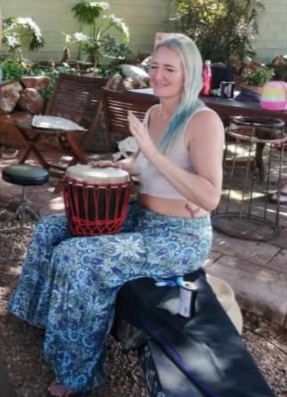
    Our neighbours called it mindless noise.

    We called it drumming, healing, celebrating and creating ❤️

    Drumming has many medicinal qualities, just not for the neighbours, apparently 🤣

    It releases dopamine, one of the happy hormones in your body.
    It’s a better anti-depressant than anything you can buy over the counter.
    It synchronises heartbeats and minds, creates a sense of community.
    The drumming and dance is a creative process and good for the soul.
    It releases endorphins, another happy hormone.
    Creating music and dance stimulates the body and mind.
    Earthing with your feet absorbs the energies of the Earth and has many health benefits.
    And finally, both drumming and dance can lead to ecstatic states that transcend the human condition ❤️

    It’s what your neighbours used to do before they became couch potatoes. It’s what your tribe did before the warehouses and factories sucked them into the industrial revolution. It’s a reclamation of our ancestral roots.

    I am a holistic life coach and wellness coach, with a special interest in relationships and woman empowerment.
    T/DR Candice Baker
    00013133614
    You can book a session with me on WhatsApp
    +0027833613255

  • Kicking The Habit

    KICKING THE HABIT
    Research has shown that addictions need to be looked at sociologically. Building strong and positive relationships and having an enriching environment will be the medicine you need to kick the habit. It’s a journey, and you need to focus on the process of working through the stages rather than judging yourself based on outcomes.

    There are some tried and tested steps that can help you towards recovery. Most importantly, ask for help. Reach out to a friend or somebody you admire. Join an Alcoholics Anonymous meeting (they can help you with gambling and drug addictions too), or find a sharing circle. And if this is happening to somebody you love, you can get support too. (I’ll cover this in my next article).

    Step 1: Honesty
    Addiction causes a level of denial that can be quite challenging for onlookers to believe. No matter how much people push someone into recovery, unless they accept that there’s a problem, overcoming it is almost impossible. You’ll need to be honest with yourself about the level of your dependence on substances, and what lengths you’re willing to go to to get a fix. Not everybody can drink responsibly. You’ll need to admit that you are powerless over drugs or alcohol. Once you admit that it’s in control of you and not the other way around, you can get started.

    Step 2: Faith
    Figure out your WHY
    Why did you become addicted.
    WHY do you need to change your behaviour?
    WHY do you need to turn your life around?

    If you are able to accept that there is a higher power in the universe, this can help keep you on track. If you want God, or any higher power, to act on your behalf, it’s imperative that you believe it can. Accepting a higher power helps you to see life from a different perspective and creates a sense of accountability.

    If you are an atheist or agnostic, learn about other philosophies such as stoicism or Buddhism, or find a person who can guide you and hold you accountable. Accountability is key.

    Step 3: Surrender
    Welcome a higher power into your life by surrendering fully to a higher purpose. When people feel like their lives lack purpose and meaning, free will can run wild and lead you down dark pathways.
    Choosing a higher purpose helps you focus on the true meaning within your life so you can feel like a valuable member of society again. You could pick a charity, join a rotary club or get involved in some community work.

    Step 4: Soul Searching
    Soul searching is a process, just like recovery. There is no single moment that defines healing. Instead, it’s a culmination of intentions and actions that lead you down the right path. Soul searching involves looking objectively inwards at yourself.
    When we’re caught up in addiction, our intentions can end up severely misaligned from how we behave. Most people have good intentions, that can get lost as your addiction interferes. Soul searching will help you become the person you want to be.

    Step 5: Integrity
    Most of the people who don’t succeed in recovery struggle most with this step. One of the hardest things in life is being honest about things that make us appear vulnerable in front of other people. However, the more you learn to speak your truth, unfiltered, the more you’ll get from the recovery process. Accept that expressing your feelings is normal, and that honesty about setbacks and negative thoughts have a better chance of being conquered if you share them.

    Step 6: Acceptance
    Addiction is often underpinned by low self-esteem and a negative opinion of yourself. Once you learn to accept that everyone has both good traits and bad characteristics, it’ll be easier to accept yourself.
    Sometimes, the hardest aspect of acceptance is letting go of the painful stories we tell ourselves about the past. Forgiving ourselves for the things we’ve done may get to the root of the addicition. Once you accept your history, you can start telling yourself new, happy stories about your future. Focusing on moving forward, setting goals and obtaining the skills necessary to achieve them will keep you on the right path, and you’ll be free of addiction for good.

    Step 7: Humility
    Antisocial behavior, such as using drugs or withdrawing from peers, often stems from a confused sense of self. Be humble, be open and willing to accept help. Take an interest in the people around you and accept help from them. Thank about it, don’t let pride stand in the way of your recovery. The more people you have in your corner, the easier it will be to stay on track. Being an addict might feel embarassing, but people are more understanding than you think. Taking the wrong actions as a result of your addiction is a lot more embarassing, you’ll need help to keep you from messing up. When you let go and ask for help, you relieve a huge weight of pressure from your life. Whether it’s your religion or cultivating a supportive friend group, learn to lean in. There is no shame in receiving support on your journey.

    Step 8: Willingness to make amends
    Write a list of the people you’ve harmed and ponder carefully over your past actions. Instead of feeling guilty or wallowing in emotion, think of ideas to make amends. Rather than seeing this as a check-box exercise, genuinely show a willingness to repair the relationships you have broken. Take positive steps to connect with these people, say sorry, and explain the journey you have undertaken.

    Step 9: Forgiveness
    If there are people in your past who have caused you pain or trauma or hurt you in any way, now is the time to let go. Resentment isn’t constructive for the mind. In fact, it breeds the type of feelings that make you more likely to turn to drugs or alcohol. Letting go of bad feelings — even if they’re aimed at people who do bad things — frees the soul. You could have a conversation with these people, write them a letter, even burn it rather than post it. Whatever works to get those feelings out in the open and stop spiralling inwards with these negative emotions.

    Step 10: Maintenance
    Quitting an addiction is a long game. Throughout the entire process, you’ll be required to check back with yourself. Be totally honest with yourself about progress so that you can move forward. Remind yourself of your WHY, to help you stay on track. Look at your past slip-ups and put processes in place to make sure you don’t get caught again. Build a strategy that works for you.

    Step 11: Making Contact
    Reach out to your higher power to find out what it’s purpose for you is. Or connect to your inner God/ Goddess and feel into what your calling could be. Everyone has a gift in life; no matter what it is, there’s something you can offer the world. When you’re working toward this purpose is when you’ll feel happiest.

    Step 12: Service
    Service is all about action. This stage is about giving back. For the rest of your life, apply everything you have learned on this journey to help you build a brighter future for yourself. Help others, take somebody under your wing, serve and protect your family and friends. Mentor someone, uplift someone, share your gifts with the world. Building strong morals and supporting those around you will make you a pillar of strength in your family, friend group or community.

    When I was studying psychology, I spent time volunteering at alcohol rehab clinics, assisting in the group therapy. I learned so many things in that time.
    At the end of the day, the only way to quit a habit is to QUIT. For once and for all, QUIT. No more excuses or bargaining. Stand resolute in your decision.
    This is your time to shine, to feel gratitude to those who have traveled with you through your darkest moments, and to give back. Show them what you are made of and stick to your chosen course through this life. It’s your life, and it’s time to move forward and embrace all the positive experiences that you will create through this process.

    I am a life coach and wellness coach.
    You can send me a WhatsApp to book a session on 0833613255

  • Thinking Out Of The Bra!

    THINKING OUT OF THE BRA!

    You get many expressions of feminism, from the burn-the-bra and grow-your-armpit-hair types, to the my-body-my-rules point of view. Women have been claiming their sovereignty back since the 60’s, and sometimes I wonder if fun got left behind with it! When did things get so serious? Why did society need to push women to the point of being on guard, on the defensive all the time?

    There are so many issues around woman’s bodies and breasts. Most notably that ‘breasts are for babies’ and ‘breasts are for breastfeeding’. And I agree 100 percent with these statements, having breast fed 2 beautiful children of my own. But more importantly breasts belong to the woman they are attached to! They are not public property or available for comment and comparison. All sizes are good sizes!
    So when it comes to being a breast fan, I’m not talking about modifying your boobs to impress a partner or flashing them on Only Fans.
    I’m talking about healing our relationship with our breasts. Coming back into balance.

    I once felt that I needed breast implants to complete my ‘look’ and it turned out they were not for me. My body rejected them from day one and I spent years struggling with the complications and my own health. And boy oh boy was removing them a trauma! It felt like losing my own breasts, like a mastectomy of sorts. Our society has created so much body dysmorphia in the eyes of men and the minds of women surrounding breasts. What is the ideal shape, the ideal size? How can we alter the appearance of our breasts to be more sexually or visually appealing? Do we draw the line at a push up bra, breast implants or just burning that bra entirely?


    Social media expects women to look a certain way, and then to change completely with the next trend. Yet we are not the same, we are all unique and each body type has it’s own charms. Perhaps we need to heal the perception of what a natural breast actually looks like?
    Afterall, you don’t see men rushing off to cut open their balls and install some large fake clangers, or at least not very often?

    Through all of this, we as woman need to learn to love and appreciate ourselves for who we are, to not be defined by our breasts, and to be body positive about our own shape.

    And sometimes, if we can learn to truly appreciate who we are on the other side of trauma and healing, there lies a whole lot of fun and freedom! Afterall, the more you focus on trauma, the more you will feel the trauma. But don’t unpack your bags and stay there, do the work and move forward.
    How would you make love if you weren’t worried about your appearance? If you didn’t feel the need to turn off the lights? How would you feel about your body if you could let go of the negative experiences and toxic thought processes?


    There is value in a sensual celebration of what it means to be woman, a woman not defined by her breasts but able to enjoy being in her own skin. Being a woman free to express herself as she wishes without fear of judgement or unwanted advances. A woman free to be her wild and unapologetic self. Not for money, not to impress anybody, but just to embody the goddess she was intended to be.

    At the end of the day, working on the relationship you have with yourself will be the most important journey you will ever travel.
    It’s time to sign up for that pole dancing class, it might just be the most fun you’ve ever had with your clothes on!
    Learn some titillating tata twirling, why wouldn’t you? Embracing your sensual side is a reclamation, you’re so much more than a mother or a badass business woman. You are a wonder of nature, a creator of life and a feral enchantress in your own right.

    So love your body for what she does for you today, give her what she needs to feel safe, and please don’t base your self worth on the size of your ‘assets’. Choose happiness, choose self expression, choose balance between the goddess, the mother, career woman, the enchantress. Embrace the shadows and the light, the yin and the yang, because taking a deep breath and surrendering into who you truly are is the ultimate freedom. You don’t need permission, and anything else is just manifesting your fear of judgement and shame. They have no place in the psyche of the embodied wild woman.

    I am a life coach and relationship coach, you can book a session with me on WhatsApp 0833613255.

  • When Menopause Hijacked My Body

    WHEN MENOPAUSE HIJACKED MY BODY

    Menopause. We’ve heard about it, whispered conversations amongst women of a certain age, secret conversations between friends. It’s the thing no woman talks openly about, because she doesn’t want to feel old or admit her age.

    Or perhaps she is dreading the middle aged spread, in denial about the rage, and blaming the world for her mood swings. (Yes, it’s still your fault, but she may have overreacted a tad). And when it hits, it takes no prisoners. Your partner will fear you, your kids will think mom’s gone off the reservation and your GP wont know what to do with you.

    So here’s what I have worked out along the way. It can be a good thing, giving less fucks and speaking your mind more. Creating better boundaries and stepping out of your mother role and into a new journey as a wild woman. Wise, independent, free.

    But the downside is real too, menopause is associated with increased inflammation in the body, a phenomenon sometimes referred to as “inflammopause”.
    This is primarily due to declining estrogen and progesterone levels, which have anti-inflammatory effects. The shift towards a pro-inflammatory state can contribute to various menopausal symptoms and increase the risk of certain health conditions.

    As a result you may experience:

    1. Hormonal Changes:
      Estrogen and progesterone, which decline during menopause, have anti-inflammatory properties.
      Their reduction leads to an imbalance in cytokines, shifting the body towards a more inflammatory state.
    2. Inflammation and Menopause Symptoms:
      -Joint pain:
      Reduced estrogen can affect joint health, leading to pain, stiffness, and increased risk ofosteoarthritis.
      -Fatigue:
      Increased inflammation can contribute to lower energy levels.
      -Weight gain:
      Menopause can lead to weight gain, which can further exacerbate inflammation.
      -Mood changes and depression:
      Inflammation has been linked to mood changes and an increased risk of depression.
    3. Increased Risk of Chronic Diseases:

    I can help you with managing Inflammation During Menopause:
    -Diet:
    Eating a diet rich in fruits, vegetables, and omega-3 fatty acids can help reduce inflammation.
    -Exercise:
    Regular physical activity can help lower inflammation and manage weight gain.
    -Stress management:
    Stress-reducing activities like yoga, meditation and spending time in nature can help lower inflammation.
    -Prioritize sleep:
    Poor sleep can increase inflammation, so establishing a regular sleep routine is important.

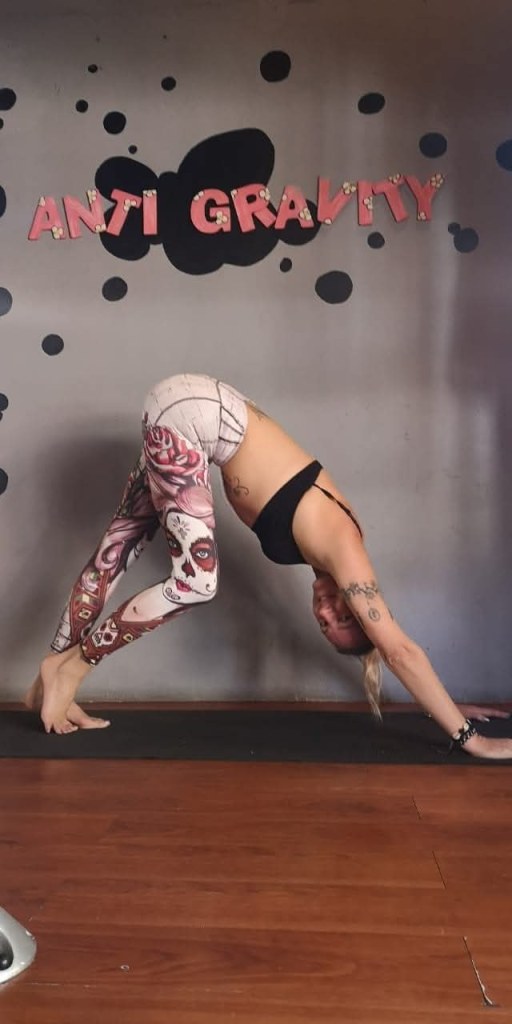
    *I offer yoga and aerial classes in Benoni and Bedfordview 💓

    *I offer meditation

    *I can help with anti-inflammatory diet tips

    *I have designed a beautiful range of holistic supplements to support you on your menopause journey.


    I am a wellness coach, and have spent the last 3 years figuring out menopause and it’s effects on the body.
    Send me a message to arrange a wellness consultation with me.
    I can help.
    WhatsApp 0833613255